Microsurgery in Dhanbad
Microsurgery in Dhanbad uses magnification to work on small blood vessels and nerves. Dr Gaurav Patodia assesses when nerve repair, blood vessel repair or free-flap reconstruction may help. The choice depends on the injury, available tissue and treatment goals.
Microsurgery in Dhanbad
A wound may expose bone, tendon or a metal implant. Elsewhere, an injury may interrupt blood flow or damage a nerve. I first assess what is missing, what remains healthy and which functions matter to you. That helps us choose a reconstruction with a clear purpose. — Dr Gaurav Patodia
CAN YOUR OWN BODY HELP REBUILD WHAT AN INJURY HAS TAKEN AWAY?
After a serious accident, a patient may hear that a wound needs a free flap or “microsurgery.”
But what does that mean for recovery?
In selected cases, we can move healthy tissue from another part of your body to rebuild the damaged area. Reconnecting its blood vessels allows that tissue to live in its new position.
The first question is: what does your injury need to recover?
Why can one wound accept a skin graft, while another needs something more?
A skin graft relies on the surface underneath for its blood supply. However, some deep wounds cannot support a graft adequately.
With flap reconstruction, living tissue brings its own blood supply. When we transfer it completely from another body area, we reconnect its vessels using microsurgical techniques.
This distinction matters after a hand injury, where missing tissue may leave tendons, nerves or bone exposed.
Similarly, after foot and leg trauma, reconstruction may need to cover a fracture or implant with healthy tissue.
The wound’s location, depth and blood supply guide the choice—not its size alone.
Understanding Microsurgery and Free-Flap Reconstruction
Microsurgery uses an operating microscope or surgical magnification, fine instruments and delicate stitches to work on small structures.
Its main reconstructive applications include:
Replacing missing tissue
Free-flap surgery transfers skin, fat, muscle or bone from one body area to another. The surgeon reconnects the flap’s blood vessels to restore its circulation.
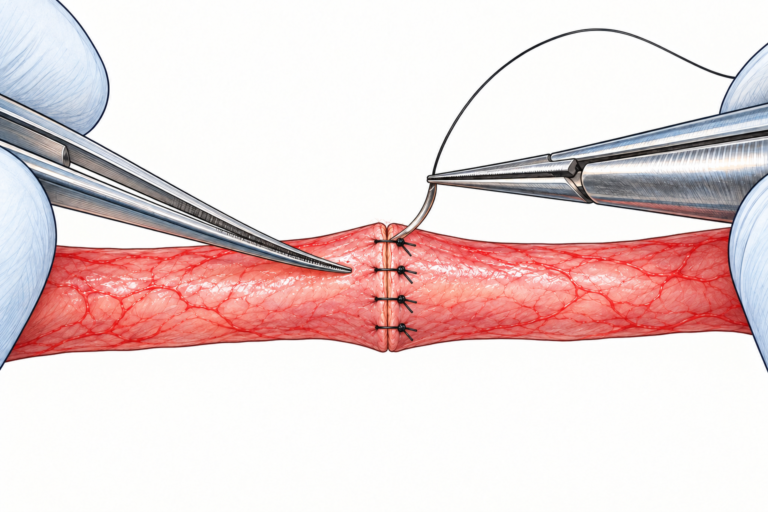
Repairing blood vessels
An injured finger or limb may lose its blood supply. Microsurgical repair can help restore circulation in suitable cases.
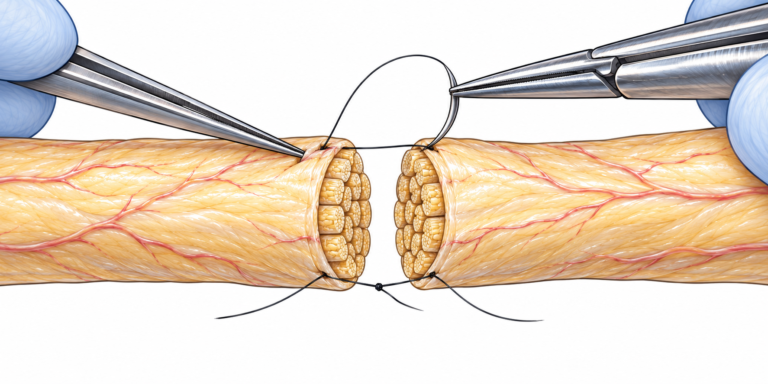
Repairing nerves
Nerve repair or grafting may create a pathway for nerve fibres to regrow. As in Brachial Plexus surgery
Reattaching a severed part
Replantation may be possible after selected finger, hand or other amputations. The injury pattern and time without circulation strongly influence the decision.
For people considering microsurgery in Dhanbad, Dr Gaurav Patodia assesses the injury and discusses suitable reconstructive options. Not every wound needs a free flap, and not every injury permits reattachment.
What treatment involves
Major free-flap reconstruction generally requires general anaesthesia and hospital admission. After surgery, the team closely monitors the tissue’s circulation.
Both the reconstructed area and the area that donated tissue need care. Depending on the injury, recovery may also involve dressings, splints, physiotherapy or further procedures.
BENEFITS
Reconstruction with a practical purpose
Depending on your injury, microsurgery may help:
Replace missing tissue where nearby tissue is insufficient.
Protect exposed structures, including bone and tendons.
Restore circulation to injured or transferred tissue.
Support useful movement and sensation through selected nerve repairs.
Preserve a finger or limb when reconstruction is appropriate.
The goal is useful recovery. The extent of the original damage still matters.
FAQ
Is microsurgery the same as minimally invasive surgery?
No. “Micro” refers to the small structures the surgeon repairs. A microsurgical operation can involve substantial reconstruction, several hours of surgery and hospital care.
Does every deep wound need a free flap?
No. Some wounds need dressings, a skin graft or a nearby flap. We consider free-tissue transfer when it offers suitable tissue that simpler options cannot provide.
If the reconstruction heals, will movement return to normal?
Not necessarily. Healthy tissue coverage is one part of recovery. Bone, tendon, nerve and joint injuries may also affect function. Rehabilitation and, sometimes, further surgery form part of the wider plan.
Been advised to consider microsurgery or flap cover?
Understand why it may be needed, what alternatives exist and what recovery could involve.
Let’s talk about the next step in your reconstruction.