How Do Testosterone and Estrogen Affect Gynecomastia?
Hormonal gynecomastia: Hormone balance is more than a number on a report.Hormonal gynecomastia develops when estrogen stimulates male breast gland growth more strongly than androgens, (including testosterone) restrain it. This can reflect changes in hormone production, conversion or tissue response. It does not always mean blood estrogen is high or testosterone is low. Understanding the history and examining the chest helps put hormone results in context. [1]

“
Hormone results help us understand the picture, but the chest examination gives those numbers their meaning.
”
– Dr Gaurav Patodia
What if your hormone report looks normal, but your chest has changed?
A result inside the laboratory range can feel reassuring. Yet it may leave you wondering why breast tissue has enlarged. The report is useful, but it cannot describe every hormone effect within the breast.
Bring the report and your questions to the appointment. Discuss when the change began, any medicines or supplements you use, and what concerns you most. You do not need to interpret the numbers alone.
The same blood result can tell different stories
A chest change that started during puberty has a different context from a new adult lump. Likewise, glandular enlargement differs from fullness caused by fat, although both can occur together.
This condition is common in studied male populations. However, being common does not explain an individual finding. Symptoms, examination and the timeline help guide the next step.
UNDERSTANDING HORMONE ACTIVITY
Hormonal gynecomastia: what is happening in breast tissue?
Hormonal gynecomastia reflects estrogen activity outweighing androgen restraint in breast gland tissue. Estrogen is normal in men; glandular enlargement is different from chest fat. [1]
Relative activity and normal blood results
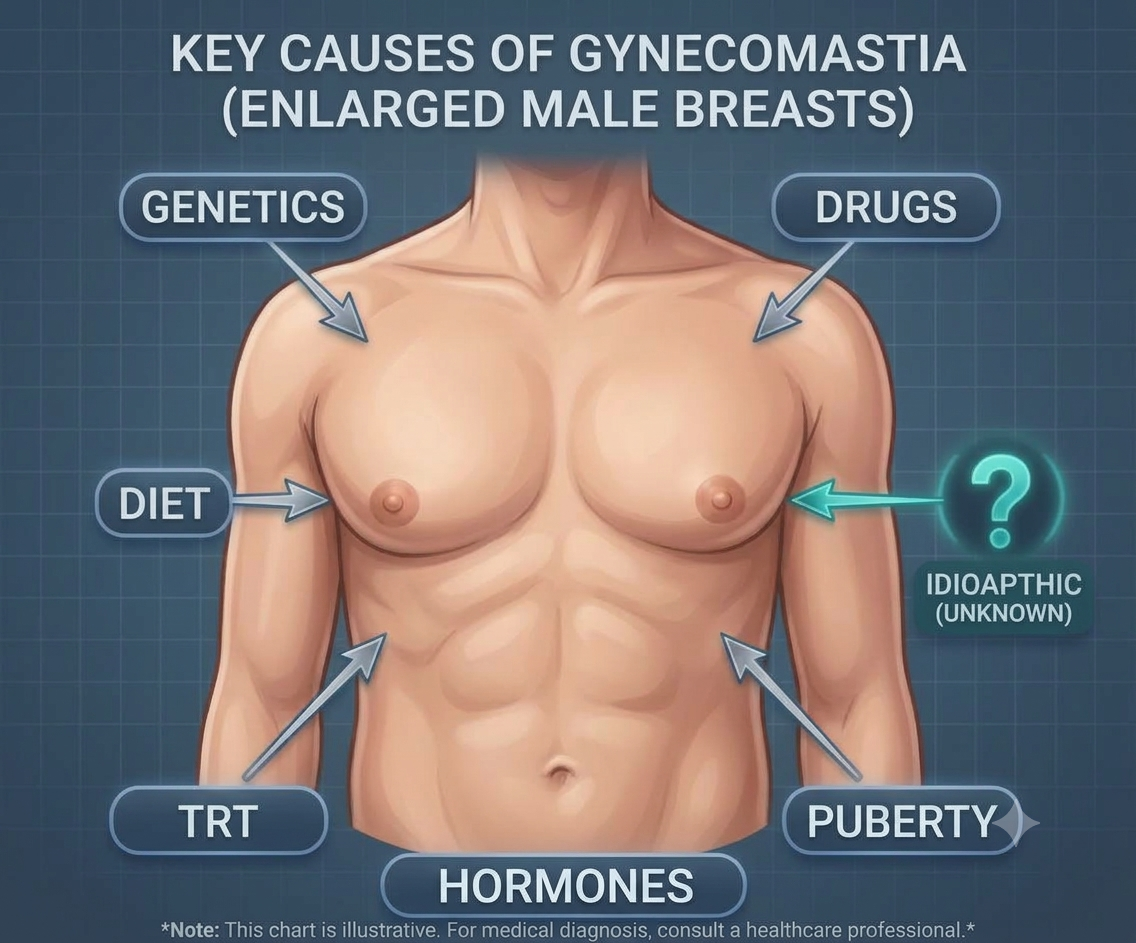
Aromatase converts androgens into estrogens in tissues, including fat. Hormone availability and tissue response influence the balance. [4] A blood sample does not measure every local effect, so normal testosterone and estrogen results do not exclude gynecomastia. [2]
Development and endocrine conditions
Pubertal changes often settle without treatment. Ageing, reduced testosterone production, thyroid disease, medicines and anabolic steroids can alter hormonal activity. Hypogonadism may arise from testicular problems or altered pituitary signals. [1] Read our age-of-onset guide and overview of causes for broader context.
Individual assessment and realistic expectations
We begin with your history and examination, then choose investigations according to the findings. Not everyone needs the same hormone panel. Testosterone is appropriate for proven deficiency, not every enlarged breast; do not start or stop hormones without medical guidance. [3]
Seek prompt assessment for rapid growth, a hard or fixed lump, bloody discharge, nipple retraction, skin dimpling or a testicular lump. These signs warrant examination, not a diagnosis from blood results alone. [2] Treating an underlying cause matters, but long-standing fibrotic tissue may persist. We can discuss realistic options through our assessment and treatment service. [2]
Medical references
[1] Narula and Carlson. Gynaecomastia—pathophysiology, diagnosis and treatment. Nature Reviews Endocrinology, 2014.
[2] Johnson and Murad. Gynecomastia: Pathophysiology, Evaluation, and Management. Mayo Clinic Proceedings, 2009.
[3] Kanakis et al. EAA clinical practice guidelines-gynecomastia evaluation and management. Andrology, 2019.
[4] Mathur and Braunstein. Gynecomastia: pathomechanisms and treatment strategies. Hormone Research, 1997.
What understanding hormones can help you do
Read results in context
A laboratory range is part of an assessment, rather than a diagnosis by itself.
Separate gland from fat
Weight and chest appearance cannot establish the type of tissue present.
Prepare a useful history
Bring previous reports and a list of medicines, supplements and hormone products.
Ask what a test will change
Ask us why we recommend an investigation and how it may guide your care.
Avoid self-treatment
Discuss hormone concerns before starting, stopping or changing a product.
Keep expectations realistic
Addressing a trigger and reducing established breast tissue are different goals.
Hormonal gynecomastia: three common questions
Can gynecomastia occur with normal testosterone and estrogen?
Yes. Blood results do not capture every local hormone effect, tissue response or earlier change. Some men with gynecomastia have results within the laboratory reference ranges.
However, normal results do not replace examination of a new or unusual breast finding. We interpret them alongside your symptoms and history. [2]
Does hormonal gynecomastia always need testosterone treatment?
No. Gynecomastia alone does not establish testosterone deficiency. The EAA recommends testosterone treatment only when a man has proven deficiency.
Do not start testosterone or an estrogen-blocking product on your own. We can explain whether a treatment is appropriate and what it can realistically change. [3]
Will the gland disappear after a hormonal trigger is treated?
It may improve, particularly when a reversible trigger is addressed early. However, long-standing tissue can become fibrotic and remain after the hormonal situation has changed.
Follow-up helps assess what is settling and what persists. An individual plan can consider observation, the underlying cause and your symptoms without assuming surgery is necessary. [2]
YOUR NEXT STEP
Understand the change before deciding what comes next.
If breast enlargement is new, persistent or worrying, arrange an individual assessment at Dermacure Clinics, Bank More, Dhanbad. Bring any hormone reports and a list of medicines or supplements. You can contact the clinic to discuss an appointment.
Ask About a Personal Assessment