Hair Transplant
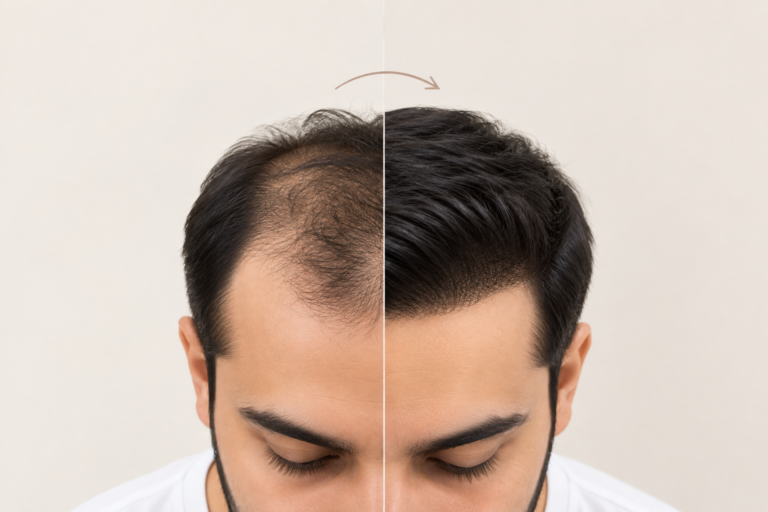
When hair loss changes your appearance, a Natural-looking hairline can change the picture.
“A good hair transplant is not about putting as many grafts as possible. It is about designing a natural hairline.” — Dr Gaurav Patodia
Your hairline isn’t just a line. It’s part of your face.
Hair loss can gradually change the way your entire face looks.
A receding hairline can make the forehead appear larger.
Thinning at the crown can make the scalp increasingly visible.
And simply adding hair isn’t enough if the new hairline doesn’t look natural.
Understand what your hair actually needs before deciding on a transplant.
Why do some hair transplants look completely natural — while others look transplanted?
It isn’t simply about the number of grafts.
The design of the hairline matters.
The direction and angle of the transplanted hair matter.
The distribution of grafts matters.
And, perhaps most importantly, the donor hair you have today has to be planned for the future.
A hair transplant should not only answer:
“Where can we put hair?”
It should answer:
“How can we create a natural result that continues to make sense years from now?”
Hair Transplant in Dhanbad
Hair transplant surgery can restore hair in areas affected by male or female pattern hair loss, receding hairlines and thinning. At Dermacure Clinics,Dermacure Clinics, Dr Gaurav Patodia evaluates your pattern of hair loss, donor area and long-term hair restoration goals before planning the procedure. The aim is natural-looking hair growth with careful hairline design and appropriate graft placement.
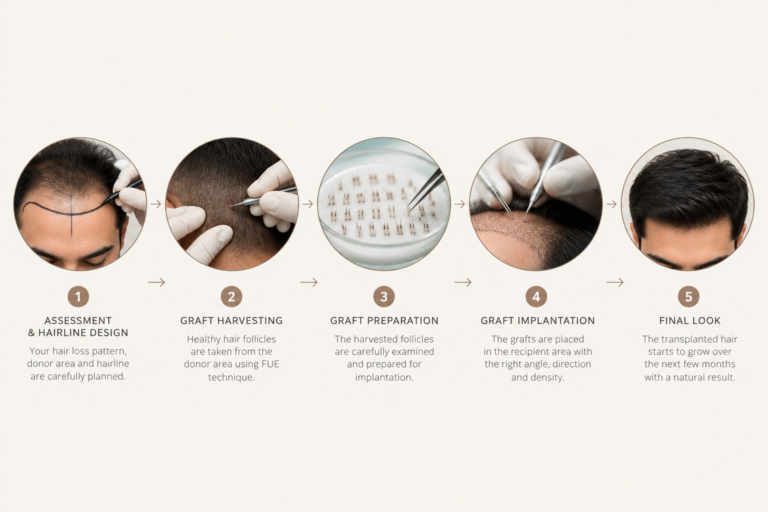
Hair transplantation typically involves moving healthy hair follicles from a donor area to areas with thinning or hair loss. The technique and number of grafts depend on your individual pattern of hair loss, donor hair availability and desired outcome.
BENEFITS
- A more natural-looking hairline — Careful planning helps create a hairline that suits your facial proportions rather than looking artificially straight or dense.
- Uses your own hair — Transplanted follicles are taken from your own donor area and placed into areas affected by hair loss.
- Restores areas affected by thinning — Hair transplantation can address selected areas such as a receding hairline, frontal thinning, mid-scalp or crown, depending on your donor supply.
- Designed around your future hair loss — The available donor hair is limited, so good planning considers not only today’s hair loss but also the possibility of future thinning.
- A personalised surgical plan — The number and placement of grafts depend on your hair loss pattern, donor density, hair characteristics and individual goals.
FAQ
1. Will a hair transplant give me completely new hair?
A transplant redistributes your existing healthy hair follicles. The final result therefore depends on your donor hair, existing hair loss and how the procedure is planned.
2. Will the transplanted hair look natural?
The goal is a natural appearance. Hairline design, graft selection, placement, angle and direction all influence how natural the result looks.
3. How many grafts will I need?
There is no standard number that suits everyone. The requirement depends on the extent of hair loss, donor hair density, the area being treated and your long-term restoration plan. This is best determined during a consultation.
Thinking about a hair transplant?
Start with an assessment of your hair loss and donor area. We’ll discuss what can realistically be achieved and whether a transplant is the right option for you.
Book a Consultation