Facial Injury & Reconstruction
When an injury changes your face, or facial features, then reconstruction can help restore it.
“Facial reconstruction is not simply about closing a wound. Every repair must consider the natural contours of the face, the position of important structures, and how the injury will heal. The decisions made during the first repair can influence the final appearance for years.” — Dr Gaurav Patodia
The injury may have healed. But does your face still feel the same?
A cut, a road accident, a dog bite or an unexpected injury can change more than the skin.
It may leave an uneven scar, a distorted eyelid, an altered lip shape, or an area of the face that no longer looks or moves quite as it did before.
Sometimes, the wound has already healed — but the concern remains.
What if there is still something that can be done?
Why the initial treatment matters most in facial wounds and its final result?
The difference often lies beneath the skin.
The depth of injury, direction of the wound, tissue loss, involvement of muscles or nerves, and the way the wound is repaired can all influence the outcome.
That is why facial reconstruction requires more than placing stitches.
A carefully planned repair considers how the face looks, moves and heals — not merely whether the wound has closed.
And even when an injury has healed poorly, secondary reconstruction may sometimes offer meaningful improvement.
Facial Injury and Reconstructive Surgery in Dhanbad
Facial injuries can result from road traffic accidents, falls, animal bites, workplace injuries, burns and other forms of trauma. They may affect the skin, soft tissues, muscles, nerves and delicate structures around the eyes, nose, lips and ears.
Depending on the injury, treatment may involve careful wound repair, layered suturing, local tissue rearrangement, skin grafting, flap reconstruction, or more complex reconstructive techniques.
Some patients require immediate surgical repair, while others seek treatment months or years after an injury because of residual deformity, tightness, asymmetry or visible scarring.
At Dermacure Clinics, Dhanbad, Dr Gaurav Patodia evaluates facial injuries with attention to both functional recovery and natural facial appearance.
What about scars left behind by facial injuries?
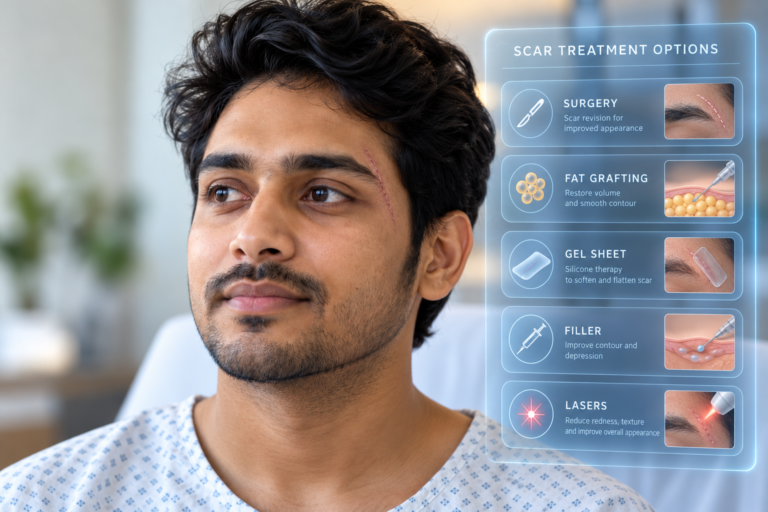
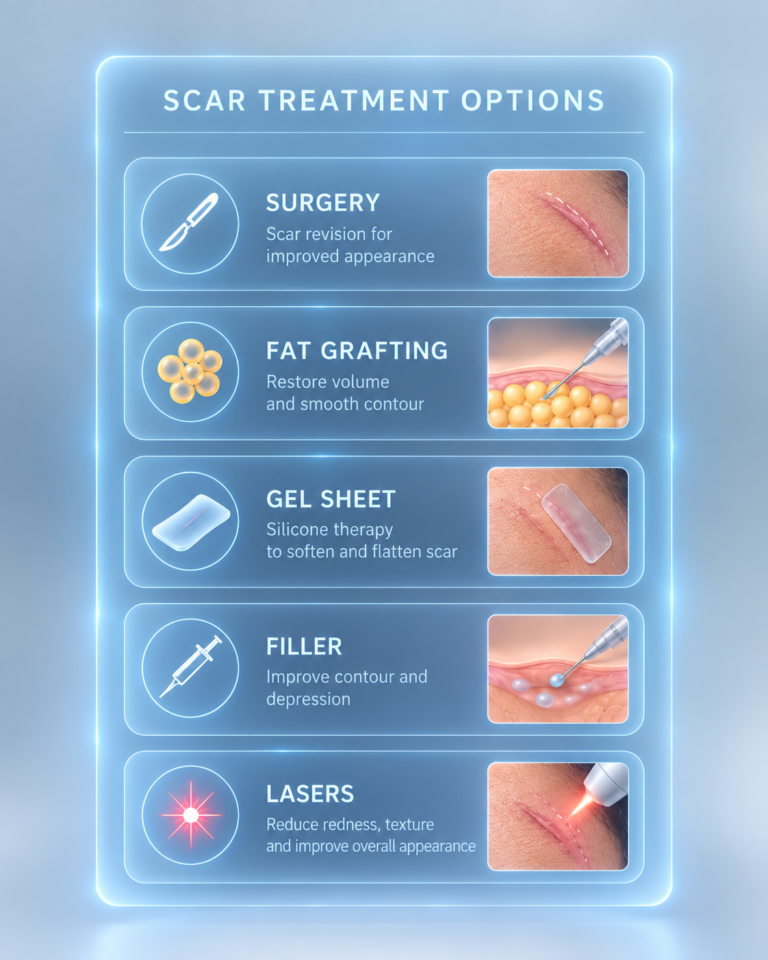
A healed facial wound can sometimes leave an unsightly, raised, widened, depressed scar.
In selected cases, surgical techniques can improve its appearance or release scar-related tightness.
Explore our Scar Revision Surgery page to understand how scars may be improved.
BENEFITS
Restoring facial structure: Repairing damaged or missing tissues to improve facial contours and symmetry.
Preserving important functions: Addressing injuries that may interfere with eyelid closure, lip movement, facial expression or other functions.
Managing complex wounds: Reconstructing injuries involving tissue loss, irregular wound edges or exposed deeper structures.
Improving post-traumatic deformities: Correcting selected problems that remain after the original injury has healed.
Reducing the impact of scarring: Thoughtful wound placement and reconstructive planning may help achieve a less noticeable scar, although no repair can guarantee a scar-free result.
FAQ
1. Can an old facial injury still be reconstructed?
Yes. Some deformities, scars and functional problems can be improved even months or years after the original injury. The available options depend on the tissues involved and the extent of damage.
2. Will facial reconstruction leave a scar?
Any surgical incision or significant injury can leave a scar. The goal is to achieve good healing, restore normal anatomy where possible, and make the resulting scar as inconspicuous as reasonably achievable.
3. Does every facial injury require plastic surgery?
No. Minor injuries may be managed with simple wound care or suturing. Injuries involving tissue loss, delicate facial structures, deeper tissues or significant deformity may benefit from specialist reconstructive assessment.
Your injury may be unique. Your reconstruction should be too.
Whether the injury is recent or the wound healed long ago, a consultation can help clarify what has been damaged, what can realistically be improved, and which treatment options are appropriate.
Let’s discuss your options and their realistic outcomes